


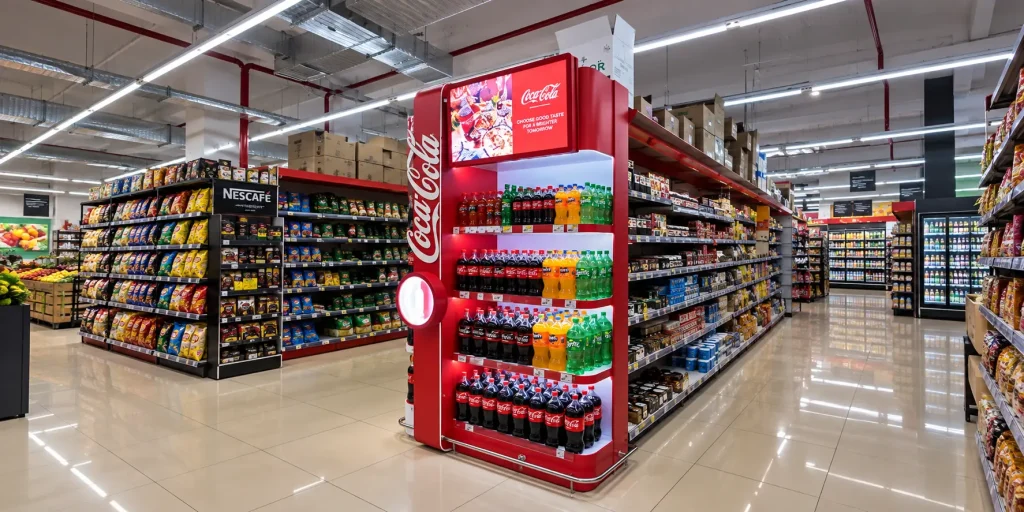
Shop Displays in Tashkent — How to Choose and Order
A shop display helps present products, highlight a particular category, organize the retail space, and attract customers’ attention. The structure should match the size of the sales area, product characteristics, brand identity, and budget. Therefore, before placing an order, it is important to determine the display’s purpose, installation location, materials, dimensions, and product placement method.
What Shop Displays Are Right for Your Business
What Is a Shop Display and What Is It Used For?
A shop display is a retail or advertising structure designed to present products, brand information, or special offers. Depending on its design, it can perform several functions at once: help customers navigate the store, showcase products, highlight new arrivals, and shape the visual appearance of the retail space.
A display is especially useful when a particular product group needs to stand out or when a separate branded area needs to be created. At the same time, its dimensions and placement should correspond to the actual customer flow inside the store.
What Tasks Does a Retail Display Solve?
A well-designed display helps organize product presentation, attract attention to a particular product, and make the retail area easier to understand. It can also be used for promotions, new product presentations, or creating a space that reflects the company’s brand identity.
Modern approaches to retail space design consider not only the appearance of the display but also customer movement. Shopify’s materials on visual merchandising specifically examine how the placement of display structures affects product perception and customer movement (Shopify).
Where Are Shop Displays Installed?
The most common locations include entrances, storefronts, walls, the central part of the sales floor, areas near checkout counters, and promotional zones. The choice depends on whether the main objective is to attract attention to the display, make products easier to find, or stimulate interest in a particular offer.
Types of Shop Displays
Floor Displays
Floor-standing displays are suitable for large products, several product categories, and independent presentation areas. They can include shelves, holders, hooks, lighting, and other elements.
Wall-Mounted Displays
A wall-mounted display allows you to use vertical space while preserving valuable floor area. It is suitable for stores with limited space, as well as products that can conveniently be placed on shelves or holders.
Countertop and POS Displays
Compact structures are placed on checkout counters, tables, and other surfaces. They are suitable for small products, promotional offers, new arrivals, and products designed to attract impulse attention from customers.
Branded Displays
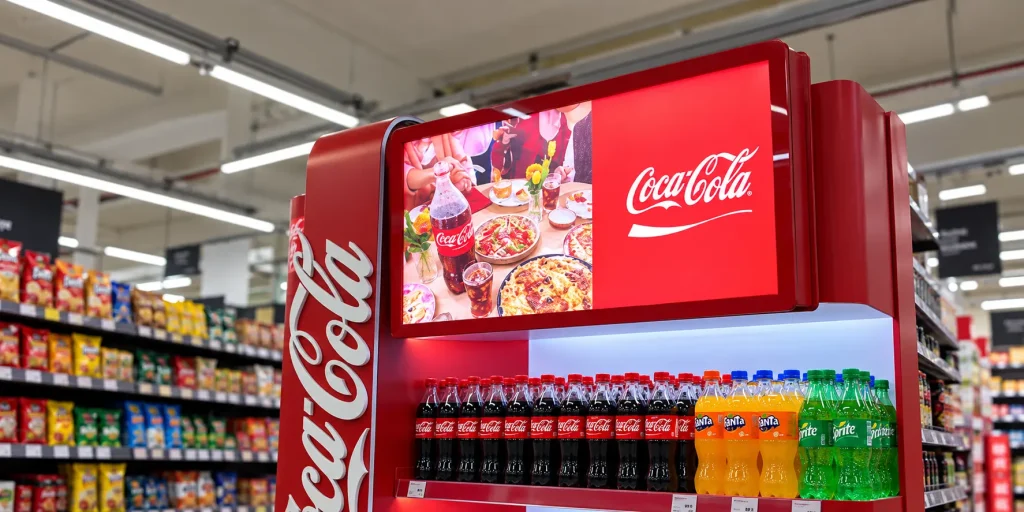
A branded display is created according to the company’s corporate colors, logo, shape, and specific requirements. This option helps visually separate one manufacturer’s products from the store’s general assortment.
Information and Advertising Displays
These structures are used to present product specifications, benefits, promotional terms, and other information. It is important to maintain a balance: customers should quickly understand the main offer without being confronted with excessive text.
What Are Shop Displays Made Of?
Main Materials
Displays can be made from MDF, laminated chipboard, metal, plastic, acrylic, glass, and combinations of different materials. The choice depends on the expected load, structure size, operating conditions, and appearance requirements.
How to Choose the Right Material for Your Products
For heavy products, the strength of the frame and shelves is particularly important. Lighter structures can be used for small products. If the display is regularly moved or the product arrangement is changed, convenient access to individual elements and the possibility of adjustment should be considered in advance.
What Affects the Durability of a Display?
The service life depends on the quality of the materials, fasteners and connections, permissible load, base stability, and surface finishing. For stores with high customer traffic, it is also important to eliminate sharp elements and ensure that the structure remains stable in case of accidental contact.
How to Choose a Shop Display: 7 Steps
- Determine the purpose of the structure and the product category.
- Measure the installation area, including width, depth, and height.
- Determine the quantity and dimensions of the products.
- Choose the format: floor-standing, wall-mounted, countertop, or combined.
- Select materials based on load and operating conditions.
- Plan branding, lighting, and informational elements.
- Agree on the design, production, delivery, and installation.
Following this sequence helps prevent situations where a finished display turns out to be too large, inconvenient for product presentation, or unsuitable for the store interior.
How Much Do Shop Displays Cost in Tashkent?
The price depends on more than just dimensions. The final cost is affected by materials, design complexity, the number of elements, branding, lighting, non-standard shapes, production quantity, delivery, and installation.
| Display Type | Materials | Main Purpose | Complexity |
| Countertop | Plastic, acrylic, MDF | Small products, promotions | Low |
| Wall-mounted | MDF, metal, laminated chipboard | Saving floor space | Medium |
| Floor-standing | MDF, metal, plastic | Category presentation | Medium |
| Branded | Combined materials | Brand highlighting | High |
Therefore, two displays of the same size can have significantly different prices. For example, a simple structure with several shelves requires fewer resources than a complex branded display with lighting and custom decorative elements.
How to Properly Place a Display in a Store
Consider Customer Movement
An empty space is not always the right location for a display. It is important to consider the entrance, main customer routes, areas where visitors stop, checkout areas, and the location of the most popular products.
If the display is placed in an aisle, it should not interfere with movement. If the goal is to attract attention to a new product, the structure should be positioned where customers naturally slow down or stop.
Height and Viewing Level
The dimensions of shelves and holders should be selected according to the average customer’s height and the characteristics of the products. Products that require maximum visibility should not be positioned too low or too high.
Lighting and Visual Emphasis
Lighting, contrasting elements, and corporate colors can help highlight the display. However, too many decorative details may distract attention from the products themselves.
Common Mistakes When Ordering Shop Displays
- Choosing a structure based only on its appearance without considering its purpose.
- Failing to measure the installation area and calculate the future product arrangement.
- Overloading the display with products, text, or decorative elements.
- Ignoring maintenance, product replenishment, and future assortment changes.
- Failing to consider load capacity, stability, and operating conditions.
For example, a display for a clothing store and a structure for electronics require completely different solutions. In the first case, dimensions and collection presentation are important, while in the second, strength, safety, and convenient equipment placement are essential.
How Displays Affect Sales and Customer Behavior
What Does Modern Analytics Show?
Retail displays can influence which products customers notice and which offers they interact with. Data published by Shopify and attributed to Frank Mayer indicates that 63% of shoppers considered retail displays when comparing similar products or brands, while 76% discovered a new product after interacting with a display.
These figures cannot be directly applied to every store: the result depends on the product category, placement, design, and audience. However, they demonstrate why display effectiveness should be evaluated not only visually but also through actual customer behavior.
How to Measure the Effectiveness of an Installed Display
You can compare sales of the highlighted category before and after installation, the number of interactions with products, and changes in average order value. For a more accurate assessment, it is advisable to consider seasonality, promotions, and changes in store traffic at the same time.
For example, if sales increase after a display is installed but a major advertising campaign also starts during the same period, it would be incorrect to automatically attribute the entire result to the display. Therefore, the comparison should take several factors into account.
What Do Specialists Say About Retail Space?
Retail design specialists consider store presentation to be part of the overall customer experience. Designer and Parsons instructor Kathlin Argiro notes in Shopify materials that modern shoppers expect not only products from a store but also a certain experience when interacting with the space.
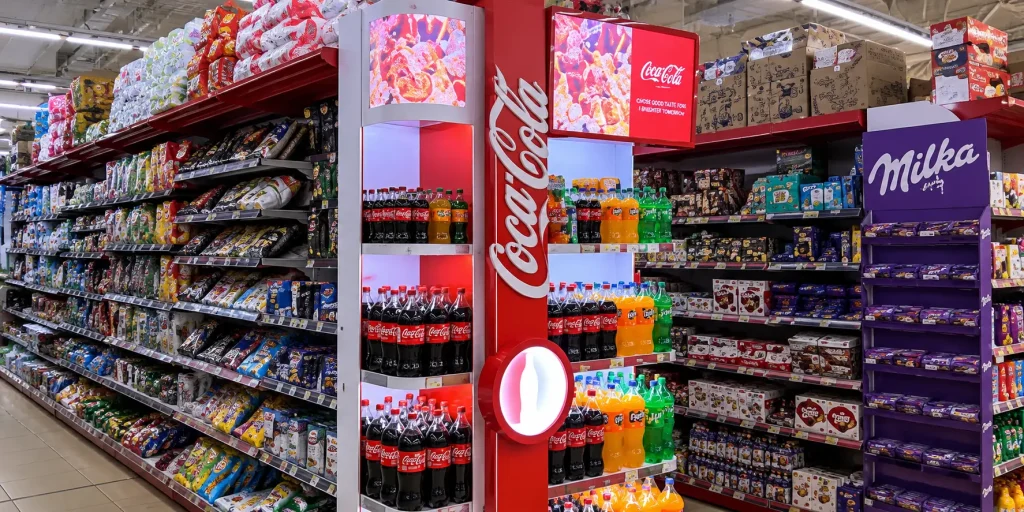
Shop Displays for Stores in Tashkent and Other Cities of Uzbekistan
Specifics of Ordering in Tashkent
In Tashkent, custom manufacturing makes it possible to take into account the actual dimensions of the retail space, corporate identity, and product assortment. Before developing a display, it is advisable to prepare photos of the premises, measurements of the installation area, and information about the products.
For projects outside the capital, delivery and installation should be agreed upon in advance. This is particularly important for large or complex structures that require careful transportation.
Shop Displays in Samarkand, Bukhara, and Other Cities
For stores in Samarkand, Bukhara, Fergana, Namangan, and other cities of Uzbekistan, the display can be designed with subsequent transportation in mind. It is important to determine the packaging dimensions, transportation method, and possibility of on-site installation in advance.
When Is Custom Manufacturing the Better Choice?
A custom display is appropriate when a store has a non-standard layout, specific product presentation requirements, corporate design requirements, or the need to place several product categories within a single structure. This approach also makes it possible to coordinate the color, shape, dimensions, lighting, and other elements.
How to Order a Shop Display from FocusAds
What Should You Prepare Before Contacting a Manufacturer?
For a preliminary estimate, it is enough to provide the dimensions of the installation area, several photos of the retail zone, information about the products, and the desired quantity of products to be displayed. If you already have corporate branding or a finished design, it should also be provided.
You can visit the FocusAds website to learn more about the company’s areas of work and advertising design solutions.
What Is Included in Design and Manufacturing?
The process usually begins with discussing the project requirements and analyzing the installation area. Materials are then selected, the structure is designed, the concept is approved, and production, delivery, and installation are carried out.
More information about the company’s services is available in the FocusAds services section.
How to Get a Price Estimate
To receive the most accurate estimate, it is advisable to provide the dimensions, number of displays, materials, branding requirements, and intended installation location. If exact measurements are not yet available, you can send photos and describe the project — this will help determine the next steps.
To discuss the project and coordinate the details, you can use the FocusAds contact page.
Frequently Asked Questions About Shop Displays
What Display Is Best for a Small Store?
Consider the available space, product assortment, and installation location. When space is limited, wall-mounted or compact countertop displays are often practical solutions.
How Much Does a Shop Display Cost in Tashkent?
There is no fixed price. The cost is determined by dimensions, materials, design, branding, additional elements, delivery, and installation.
Can a Display Be Made According to a Custom Design?
Yes. The structure can be designed according to the dimensions of the premises, corporate identity, specific product assortment, and display requirements.
What Materials Are Best for a Retail Display?
The choice depends on the expected load and operating conditions. MDF, laminated chipboard, metal, plastic, acrylic, glass, and combinations of these materials can be used for different applications.
Can Delivery and Installation Be Ordered in Other Cities of Uzbekistan?
The possibility of delivery and installation should be agreed upon based on the city, display dimensions, and project requirements.
How Can the Effectiveness of an Installed Display Be Measured?
Compare sales of the highlighted category, customer interaction with the products, and other relevant indicators before and after installation, while also accounting for promotions, seasonality, and changes in store traffic.
Conclusion: How to Choose a Shop Display
When choosing a shop display, it is important to consistently determine four key parameters: purpose, installation location, structure, and budget. This makes it easier to select the appropriate materials, dimensions, design, and additional elements.
If a ready-made solution does not meet your requirements, a custom display can be produced according to your specifications. To calculate the project, you only need to provide the dimensions or photos of the retail area and describe the products that need to be displayed. This makes it possible to select the appropriate display format, determine the necessary materials, and estimate the project cost.

Related Posts
Office Branding in Tashkent: Creating a Strong Company Image
Office branding is the process of designing a workspace in the company’s unified visual style using a logo, corporate colors,…
Banner production in Tashkent: What Changed in 2026
Banner production in Tashkent and across Uzbekistan remains a relevant service, but the market has fundamentally changed. Businesses no longer…

Light advertising manufacturing in Tashkent & Uzbekistan: Trends 2026
Light advertising manufacturing in Tashkent and Uzbekistan: Trends for 2026 Home page News Light advertising manufacturing in Tashkent and Uzbekistan:…

REQUEST A CALL
Leave a request. Our managers will contact you soon and calculate the cost of your project.