


In-Store Navigation: How to Choose and Order in Tashkent
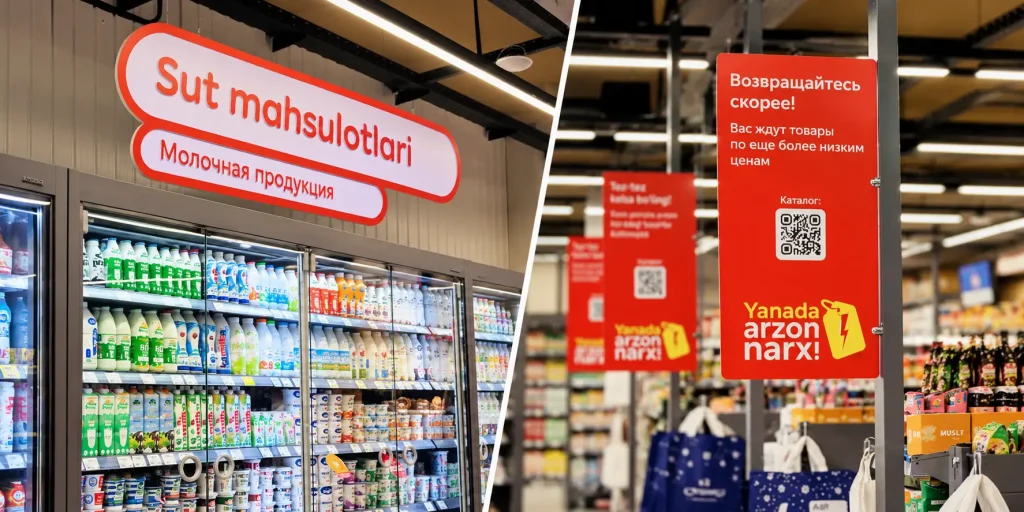
In-store navigation is a system of signs, information boards, maps, and other elements that helps shoppers navigate a retail space quickly. Well-designed navigation shows where particular departments are located, how to reach a specific category or checkout area, reduces search time, and makes the shopping experience clearer and more convenient.
What Is In-Store Navigation and Why Is It Important?
A shopper should be able to understand where they are, where they need to go, and what is located further along the route. If this information is missing or difficult to read, customers spend more time searching for products, go back to previously visited areas, or ask employees for assistance.
In-store navigation is particularly important for supermarkets, large retail halls, clothing stores, construction markets, electronics stores, and other facilities with numerous product categories.
Research into shopper behavior confirms that in-store signage can influence visual attention and the product search process. A study published in the Journal of Retailing and Consumer Services examined how the placement of navigation elements affects shoppers’ attention and orientation within a retail environment (research on the impact of in-store signage).
What Elements Does In-Store Navigation Include?
A navigation system can consist of several types of structures. Their quantity and placement depend on the layout, floor area, and typical customer routes.
| Element | Where It Is Used | Main Purpose | Features |
| Suspended signs | Large retail spaces | Long-distance orientation | Highly visible |
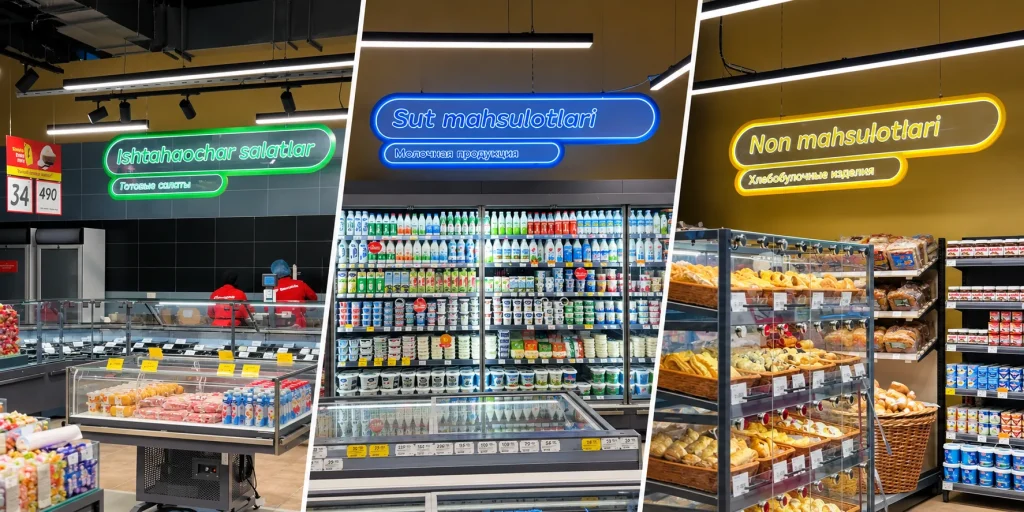
| Wall-mounted signs | Departments and zones | Identifying categories | Compact |
| Floor navigation | Aisles and specific areas | Directing movement | Highly noticeable |
| Store maps | Entrance areas | General orientation | Shows department locations |
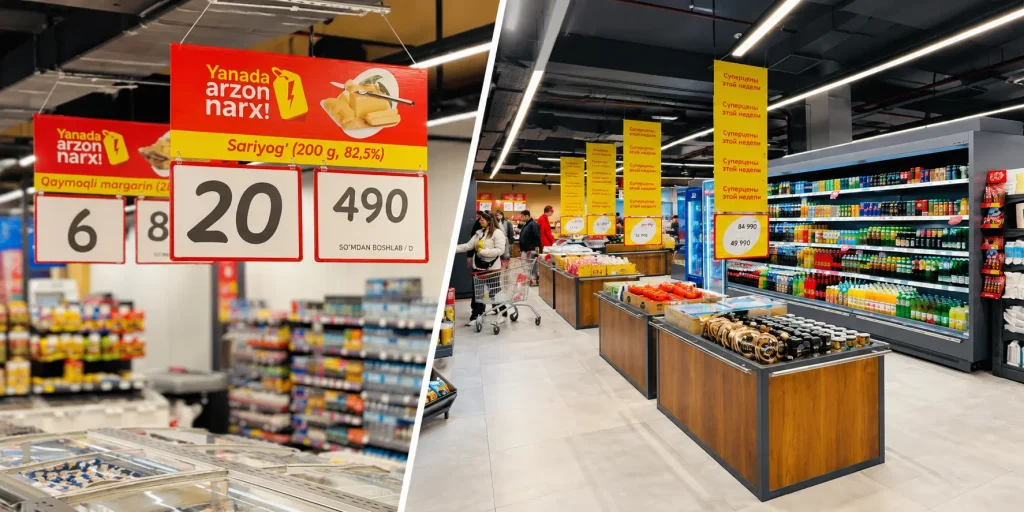
Suspended structures are useful where shoppers need to see a sign before reaching the relevant department. Wall-mounted signs are suitable for identifying specific areas, while store maps help customers quickly understand the overall layout.
It is important not to turn the store into a space filled with excessive signage. Every element should serve a specific purpose and form part of a unified navigation system.
How to Properly Develop In-Store Navigation
The process should begin with an analysis of the premises rather than with the choice of materials. Entrances and exits, checkout locations, main aisles, product groups, and areas where shoppers most frequently change direction should all be examined.
The next step is to create logical routes. Customers should receive the necessary information exactly when they need to decide where to go next.
The design should also take into account ceiling height, viewing distance, lighting, retail floor area, and the store’s visual identity. Plastic, PVC, acrylic, metal, composite materials, and other solutions can be used for production.
Particular attention should be paid to testing the completed system. One practical approach is to follow several typical routes as if you were a first-time shopper and check whether each direction is understandable without assistance from an employee.
How to Choose Navigation for a Store in Tashkent
A small store does not always require a large number of structures. In many cases, several highly visible signs, clearly marked main zones, and understandable information near the entrance are sufficient.
A large supermarket or retail facility requires a more comprehensive system. Such stores may use category signs, intermediate orientation points, maps, checkout signs, sanitary facility indicators, exit signs, and other important markers.
When choosing a solution, consider:
- the size and configuration of the retail area;
- the intensity of customer traffic;
- the distance between key zones;
- lighting and installation height;
- the store’s corporate colors and visual identity;
- operating conditions and the need to periodically replace information.
For Tashkent and other cities in Uzbekistan, the approach may differ depending on the type of facility. Navigation for a small store in Namangan or Fergana may have a completely different structure from a system designed for a large retail facility in Tashkent. Therefore, ready-made templates do not always provide the most effective solution.
How Much Does In-Store Navigation Cost?
The price depends on more than just the number of signs. The final cost is influenced by the dimensions of the structures, materials, design complexity, graphic application method, lighting, mounting system, production volume, and installation.
When comparing manufacturers’ offers, it is important to consider the entire package of work. Two signs of the same size can differ considerably in material quality, printing quality, mounting method, and service life.
Before calculating the budget, it is useful to determine the exact number of elements and their purpose. This makes it possible to select suitable materials and obtain a more accurate production estimate.
- Determine the store area and layout.
- Divide the premises into main zones.
- Identify the main customer routes.
- Create a list of required signs.
- Select dimensions, materials, and mounting methods.
- Calculate production and installation costs.
- Test the system along several real customer routes.
- Order production of the complete set.
Common Mistakes When Creating In-Store Navigation
One common problem is signage that is too small to read from a distance. Another is excessive information that makes the main message difficult to distinguish from secondary details.
A system in which every element has a different design also performs poorly. If colors, fonts, dimensions, and placement principles constantly change, customers have a harder time perceiving the store as a unified space.
In practice, navigation errors can cause shoppers to spend more time searching, return to areas they have already visited, or ask employees for assistance.
How to Measure the Effectiveness of In-Store Navigation
Effectiveness can be evaluated not only visually. A useful approach is to conduct a small study before and after installing the navigation system.
For example, several typical routes can be selected: from the entrance to a specific department, from a department to the checkout, and from the entrance to a particular product category. For each route, record the completion time, number of stops, and instances where the person has to change direction.
This approach makes it possible to identify actual problems in the retail environment rather than simply evaluating the appearance of the signs.
It is also possible to compare the number of customer inquiries to employees and traffic in individual zones. If shoppers find the required departments faster after the navigation system is introduced, this provides a practical indicator of the solution’s effectiveness.
According to the National Statistics Committee of Uzbekistan, retail trade turnover in Uzbekistan reached 310.9 trillion soums in January–July 2026, increasing by 20.2% in real terms compared with the same period of the previous year. As of August 1, 2026, more than 90,000 commercial enterprises were operating in the retail trade sector. These figures reflect the scale and development of the country’s retail market (data from the National Statistics Committee of Uzbekistan).
What Research Says About Shopper Navigation
Navigation is connected not only with signs but also with how easily a person can form an understanding of the space around them. Research into consumer behavior shows that shoppers use visual landmarks and spatial information when searching for products, while difficulties in understanding a route can make the search process more complicated.
Therefore, an effective system should take into account the entire customer journey, from entering the store to reaching the required category, rather than simply labeling individual departments. This is particularly important for stores with complex layouts and a large number of product groups.
How to Order In-Store Navigation in Tashkent
Before contacting a company, it is advisable to prepare a floor plan, photographs of the retail area, dimensions of the main zones, a list of departments, and information about the store’s visual identity. This will make it easier to determine the required number of structures and how they should be positioned.
When reviewing a commercial proposal, check whether the price includes design development, production, materials, mounting hardware, delivery, and installation. This makes it easier to compare different options correctly and avoid additional costs after the project has been approved.
For a comprehensive solution, you can contact FocusAds, where you can order the design and production of advertising and navigation structures for retail facilities. The available solutions are presented in the company’s services section.
Frequently Asked Questions About In-Store Navigation
How Much Does In-Store Navigation Cost?
There is no fixed price. The cost is calculated based on the number of elements, their dimensions, materials, design, mounting systems, production, and installation.
Which Materials Are Suitable for Navigation Signs?
The choice depends on the installation location and operating conditions. Plastic, PVC, acrylic, metal, composite materials, and other options can be used.
What Size Should Navigation Signs Be?
The size depends on the distance from which shoppers need to see and read the information. The farther away the sign is located, the larger the structure and lettering should be.
Does a Small Store Need Navigation?
Yes, but the system can be compact. The main goal is to identify key zones and make the customer route easy to understand.
Which Is Better: Wall-Mounted or Suspended Navigation?
It depends on the layout. Suspended signs are convenient for large retail halls, while wall-mounted signs are suitable for identifying specific departments and zones.
Can Store Navigation Be Designed in the Company’s Corporate Style?
Yes. Colors, fonts, graphic elements, and structural shapes can be adapted to the existing corporate identity.
How Long Does Production and Installation Take?
The timeframe depends on the number of structures, design complexity, selected materials, and scope of installation work. Exact deadlines are determined after the project has been agreed upon.
How to Make Store Navigation Easy for Shoppers to Understand
Good navigation begins with the logic of movement rather than the appearance of an individual sign. First, customer routes should be analyzed, key decision points identified, and then appropriate dimensions, materials, and placement methods selected.
For a store in Tashkent or another city in Uzbekistan, the optimal system should take into account the specific layout, product structure, and customer traffic intensity. After production, it is advisable to test the system along real customer routes and adjust individual elements if necessary.
A well-designed navigation system helps shoppers find their way around the store faster, makes the retail space easier to understand, and creates a more consistent customer journey.
If the project has already been prepared and you need a cost estimate or want to discuss production, you can provide the store parameters and project requirements through the FocusAds contact page.

Related Posts
Why Installation Is Not a Final Formality, But One of the Most Important Project Stages
In advertising production, attention is often focused on design and manufacturing, while installation is perceived as the final technical part.…

Interior Branding for Business: Why a Brand Must Work Inside as Well as Out
Many companies invest in their facade and outdoor advertising but underestimate interior branding. Yet, it is inside the space where…

How Good Signage Affects Sales and Brand Perception
For many companies, a sign is the first physical touchpoint between the customer and the brand. Before talking to a…

REQUEST A CALL
Leave a request. Our managers will contact you soon and calculate the cost of your project.