


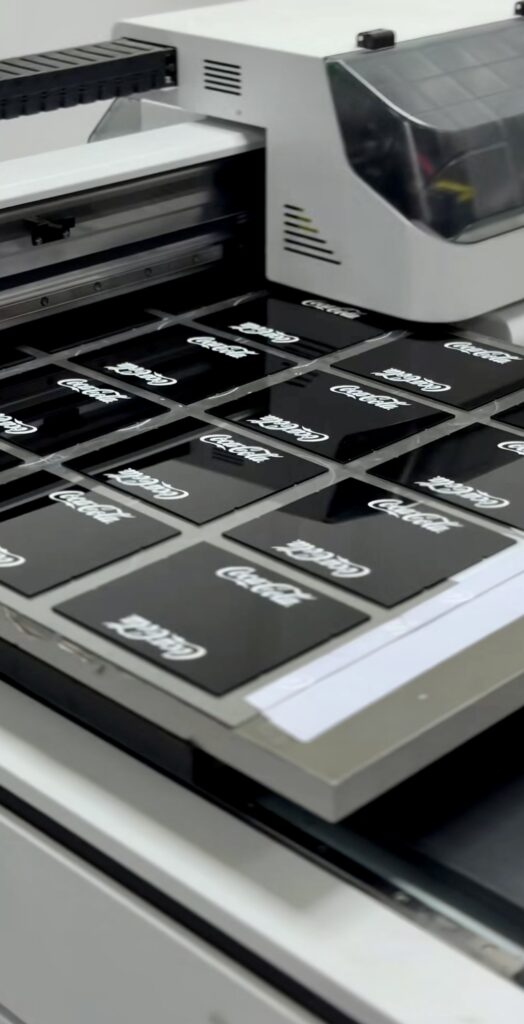
Wide-Format Printing in Uzbekistan and Tashkent: Indoor and Outdoor Trends
Over the past six months, Uzbekistan’s advertising market has strengthened the position of offline media despite the active growth of digital screens. Wide-format printing has become a strategic business tool in Tashkent and the regions — from facade banners to interior solutions. Below is an analysis of changes in demand, budgets, and quality requirements for indoor and outdoor advertising.
Key Market Changes in Recent Times
- Growth of outdoor advertising investments in 2025
According to Frank Media, the outdoor advertising market in Uzbekistan reached approximately $30.3 million in the first half of 2025. This strengthened demand for large-format printing, facade banners, billboards, and branding of new residential developments. In Tashkent, banks, developers, and retailers are investing most actively. - Why large-format printing is back in the spotlight for brands
Businesses are returning to physical presence in the urban environment: large-format printing provides scale, visibility, and reach without algorithmic limitations. In Samarkand and Bukhara, demand for seasonal campaigns and tourism projects is growing; in Fergana and Andijan, local branding of retail outlets is becoming more common. - Shift in demand toward quality and technology
Clients are increasingly asking about 720–1440 dpi resolution, UV inks, eco-solvent printing, PVC density of 440–510 g/m², and resistance to fading. High-quality wide-format printing and interior wide-format printing are becoming standard for retail and HoReCa. Price is no longer the only criterion — service life and accurate color reproduction based on CMYK profiles are also important. - Banner and large-format printing as a market driver
Banner wide-format printing remains the most commercially significant segment. Customers compare technologies, edge welding, eyelets, and installation options. In Tashkent, the share of urgent projects is higher due to intense competition for locations and the need to launch promotions quickly. - Impact of DOOH and digital screens on printing budgets
The share of digital formats in the media market has grown to 30–35% according to industry reviews, but printed media are not disappearing — they are becoming integrated into omnichannel campaigns. Wide-format print advertising works as a foundation for brand awareness, while LED screens increase contact frequency. - Urgent wide-format printing and new business expectations
The trend toward speed has intensified: completion within 24–48 hours, citywide logistics, and turnkey installation are increasingly expected. A wide-format printing company must provide color control, prepress preparation, and transparent deadline calculations. - Regional differences in demand across Uzbekistan
Tashkent has the highest volume and the largest share of urgent orders; Samarkand and Bukhara have a tourism focus and demand for facade solutions; Fergana, Kokand, Margilan, Andijan, and Namangan are seeing local campaigns and retail chain branding; Karshi and Nukus maintain stable demand for outdoor structures for municipal and commercial projects.
What This Means for Business
- Plan campaigns based on the format — indoor or outdoor — and the exposure period.
- Include material and technology requirements in the technical brief.
- Evaluate not only the cost of wide-format printing but also its service life.
- Consider synergy with DOOH rather than treating the formats as competing channels.
If the goal is a fast launch and measurable results, ordering wide-format printing with technological quality control and well-planned installation reduces the risks of defects and missed deadlines.
Uzbekistan’s Advertising Market Over 6 Months: Figures and Facts
During the first half of 2025, the outdoor advertising market demonstrated steady growth. According to an analytical review published in the Uzbekistan outdoor advertising market in 2025, total investment reached $30.3 million. This is one of the highest figures in recent years and an important indicator for the large-format printing segment.
What Is Behind This Figure
1. Growth in investments in Tashkent.
The capital remains the key center of advertising activity. The increasing number of residential complexes, retail facilities, and business centers is creating stable demand for facade banners, construction-site branding, and interior solutions. For companies, this means increasing competition for visual presence in the urban environment.
2. Activity from developers and the banking sector.
Developers and financial organizations were among the largest advertisers during the first half of the year. This directly affects the volume of large-format printing orders: large construction-site fences, advertising mesh banners, and information boards require technological preparation and durable materials.
3. Shift in budgets toward strategic offline presence.
Despite the growth of digital screens, brands are not abandoning physical media. The reason is straightforward: outdoor visual advertising builds trust and awareness at the city level. In Tashkent and Samarkand, this is particularly noticeable in areas of active construction and major transport hubs.
What This Means for Business
- Demand for wide-format printing services is becoming more systematic rather than occasional.
- Companies are choosing contractors with experience working on large-scale projects and an understanding of technical standards.
- Priority is given to projects that take service life, weather resistance, and color reproduction quality into account rather than focusing solely on price.
Thus, current market dynamics confirm that investment in visual presence is increasing, along with the role of technological and professional printing in Uzbekistan — particularly in Tashkent, where competition for audience attention is at its highest.
How This Affects Wide-Format Printing
Growing investment in outdoor advertising is directly changing the structure of demand for production services. Businesses in Tashkent and the regions are approaching visual communication more strategically: they are choosing not simply a media format, but a solution with a predictable service life, clear economics, and fast implementation. This increases the importance of professional artwork preparation, color control, and proper installation.
Large-Format Printing and Facade Advertising
In recent months, there has been an increase in orders for banner wide-format printing for construction sites, facades, and temporary fences. Developers, property management companies, and shopping centers are actively using large-format printing to attract attention to properties even during the construction stage.
What has changed in practice:
- Branding of residential complexes and shopping centers has become an essential stage of project launch. Information mesh banners, 3×6 m banners and larger, and facade banners help brands quickly establish visibility in a competitive environment.
- Large-format printing volumes have increased. Orders have become larger: several structures in different parts of the city instead of a single advertising medium.
- Material requirements have become stricter. PVC density of 440–510 g/m², reinforced edges, and resistance to wind loads are now considered standard rather than optional.
For businesses, this means choosing a contractor capable of providing not only production but also proper load calculations, material selection adapted to the climate of Tashkent and the regions (Samarkand, Bukhara, Nukus), and professional installation.
Interior Wide-Format Printing
The indoor solutions segment is showing steady growth, particularly among retail and HoReCa businesses. Stores, cafes, showrooms, and medical centers use interior wide-format printing for window displays, walls, navigation, and promotional areas.
Key trends:
- Growing demand for high-quality wide-format printing for retail spaces. Brands strive for accurate color reproduction so that corporate colors correspond to their brand guidelines.
- Growing use of UV printing and latex technology. These methods provide environmental benefits, no strong odor, and the ability to use printed materials indoors without creating risks for visitors.
- Higher requirements for detail. Resolution of 720–1440 dpi is becoming standard for interior projects, especially in the premium segment.
For business owners, this addresses a key concern: whether it is possible to achieve a bright, durable image without the risk of fading or defects. Modern technologies make it possible to combine an attractive appearance with operational durability, which is particularly important for high-traffic spaces.
Thus, changes in the advertising market have strengthened two parallel development areas: large-scale facade solutions for outdoor advertising and technological interior projects for indoor environments. Both directions require a professional approach and precise compliance with technical parameters rather than simply competitive pricing.
Shift Toward Quality — What Has Changed in Customer Requirements
Over the past six months, the way businesses in Uzbekistan choose contractors has noticeably changed. Whereas the minimum price used to be the main criterion, technical specifications, consistent results, and a predictable service life are now becoming priorities. This is particularly noticeable in Tashkent, where intense competition for audience attention leaves little room for error.
Before — Price. Now — Parameters and Service Life
Companies are increasingly asking specific questions:
- what printing resolution is used — 720 or 1440 dpi;
- what inks are used — eco-solvent or UV inks;
- what is the banner density — 440 or 510 g/m²;
- how many months the image will retain its saturation without fading;
- whether the CMYK color profile has been configured correctly.
This indicates a maturing market. Businesses understand that large-format printing is an investment in their image rather than a one-time purchase.
Why DPI and Technologies Have Become More Important
A resolution of 720–1440 dpi directly affects image detail. For facade structures installed at height, a more moderate resolution may be acceptable, while interior projects — window displays, photo zones, and branded walls — require maximum sharpness.
Eco-solvent technologies are suitable for outdoor media, offering a good balance between price and durability. UV printing provides a higher level of wear resistance and accurate color reproduction, making it popular in the premium segment and retail spaces.
Materials and Service Life
Banner density of 440–510 g/m² has become standard for outdoor solutions. A denser material better withstands wind loads and temperature fluctuations, which are relevant to the climate of Tashkent, Samarkand, and Bukhara.
Customers are increasingly asking about warranty periods, resistance to UV radiation, and mechanical damage. This directly affects the choice of a contractor providing wide-format printing services.
What This Means for Business
- Saving money on technology can lead to additional expenses later.
- High-quality printing reduces the risk of fading and deformation.
- Proper artwork preparation and CMYK color profile control help preserve corporate colors without distortion.
Thus, the market has shifted from the logic of “make it cheaper” to the logic of “do it correctly and make it last.” For companies in Uzbekistan, this means a more conscious approach to contractor selection and a greater willingness to invest in quality that works for the brand every day.
DOOH vs. Printing — Competition or Synergy?
In recent months, the market has increasingly discussed the redistribution of budgets between digital screens and traditional media. According to a review of the share of digital outdoor advertising in Uzbekistan, the DOOH segment accounts for approximately 30–35% of the media market. This is a significant figure reflecting the active growth of LED screens in Tashkent and major cities.
What This Means in Practice
1. Budget redistribution rather than replacement.
Some spending is indeed shifting toward digital formats due to dynamic content and placement flexibility. However, businesses are not abandoning physical media — they provide continuous visual presence 24/7 without dependence on video rotation or playback schedules.
2. Different tasks — different tools.
DOOH is effective for frequent contacts and dynamic messages. Large-format printing works on scale and long-term brand presence in the urban environment. Facade banners, branded fences, and interior solutions create a physical point of reference that cannot simply be “scrolled past.”
3. Synergy strengthens results.
Companies in Tashkent are increasingly combining formats: a large-format structure establishes the foundation for visual presence, while a digital screen increases reach and contact frequency. As a result, wide-format print advertising remains a fundamental element of the strategy rather than an outdated tool.
Why Printed Solutions Retain a Fundamental Role
- They provide continuous exposure.
- They do not depend on display time or the order of video rotations.
- They are suitable for long-term projects — residential complexes, shopping centers, and retail chains.
- They build trust through the brand’s physical presence.
Thus, the issue is not competition but the redistribution of roles within the media mix.
Regional Analysis — Where Is Demand Higher?
Order dynamics differ by city. The table below provides a summary based on internal monitoring of commercial proposals, tenders, and business activity over the past six months.
| City | Outdoor Demand | Indoor Demand | Share of Urgent Orders | Trend |
| Tashkent | Very high | High | 40% | Growth |
| Samarkand | High | Medium | 25% | Stable |
| Bukhara | Medium | Medium | 20% | Growth |
| Fergana | Medium | Low | 18% | Growth |
| Nukus | Low | Medium | 12% | Stable |
What the Data Shows
- Tashkent remains the leader in order volume and the share of urgent projects. Competition between brands requires fast production and installation.
- Samarkand and Bukhara demonstrate stable demand due to tourism and the development of commercial infrastructure.
- The Fergana Valley is showing gradual growth due to the expansion of local chains and the construction of new retail facilities.
- Nukus is characterized by more stable dynamics, with an emphasis on long-term projects.
For businesses, this means taking regional specifics into account when planning campaigns. In the capital, speed and scale are important; in the regions, budget efficiency and material durability under local climatic conditions are key considerations.
As a result, Uzbekistan’s market is forming a balanced model: digital formats increase reach, while printed solutions provide stability and physical brand presence in the urban environment.
Wide-Format Printing Cost — What Determines the Price
One of the most common questions businesses ask is what determines the cost of wide-format printing and why market offers can differ significantly. The difference is almost always explained by technical parameters, the scope of work, and project implementation conditions rather than by a “brand markup.”
Material
The basis of the calculation is the type of media. For outdoor applications, banner fabric with a density of 440–510 g/m², mesh, self-adhesive film, or backlit material for lightboxes is commonly used. For indoor applications, options include film, canvas, photo paper, plastic, and composite panels.
The higher the density and weather resistance, the higher the cost. However, saving on materials often leads to deformation, fading, or the need for replacement after only a few months. This is particularly relevant in the climate of Tashkent and the regions.
Resolution
Printing resolution directly affects image detail. A resolution of 720 dpi is suitable for facades, while interior projects and window displays often use 1440 dpi.
Higher resolution requires more ink and production time. However, for premium brands or locations viewed from a short distance, this can be justified because image quality affects brand perception.
Urgency
Urgent wide-format printing involves priority production, reallocating equipment capacity, and sometimes working outside the standard schedule.
If a project needs to be completed within 24–48 hours, this affects the budget. In Tashkent, the share of such orders is higher than in the regions due to intense competition and the fast pace of promotional launches.
Installation
The price includes not only production but also installation. Factors affecting the calculation include:
- installation height;
- need for special equipment;
- complexity of mounting systems;
- removal of existing structures.
Errors during installation can lead to damage to the media, so a professional approach saves money in the long term.
Answers to Frequently Asked Questions
What determines the cost of wide-format printing?
It depends on the material, resolution, area, urgency, and installation complexity. The final calculation is always individual.
How to choose a wide-format printing company in Uzbekistan?
Pay attention to the portfolio, technologies used (eco-solvent, UV), material warranty, and transparency of calculations. It is important that the contractor explains the technical parameters rather than simply quoting a price per square meter.
When is urgent wide-format printing justified?
When the launch of a promotion or the opening of a facility is tied to a specific date. In this case, speed becomes a priority, but it is important to clarify whether quality may be affected by accelerated production.
Understanding the pricing structure removes the customer’s main concern: whether they are overpaying. In reality, investment in quality materials, accurate color reproduction, and professional installation can prevent additional costs and preserve a brand’s reputation in the urban environment of Uzbekistan.
Step-by-Step Strategy for Business
For investments in visual communication to deliver meaningful results, it is important to act systematically. Below is a practical algorithm for companies in Tashkent and the regions of Uzbekistan that helps avoid unnecessary expenses and mistakes when ordering large-format printing.
- Determine the Format: Indoor or Outdoor
The first step is to understand where the media will be placed.
• Outdoor is suitable for facades, construction fences, billboards, and banners on major roads.
• Indoor is suitable for retail floors, windows, offices, medical centers, and HoReCa.
The format determines the choice of material, resolution, technology, and expected service life. A mistake at this stage can lead to premature wear or unnecessary expenses. - Choose the Material
The material must correspond to the operating conditions. For outdoor applications — high-density banner fabric or mesh; for interiors — film, canvas, plastic, or composite.
Important factors include:
• humidity levels and solar exposure;
• expected placement period;
• viewing distance.
The right choice reduces the risk of fading and deformation. - Calculate the Placement Period
A campaign lasting two weeks and a project designed for 12 months require different solutions. If the placement is short-term, there is no reason to overpay for maximum material durability. For long-term structures, resistance to UV radiation and mechanical loads becomes a priority.
A clearly defined planning horizon makes it possible to optimize the budget without sacrificing quality. - Compare Printing Technologies
Modern wide-format printing services include several technological solutions:
• eco-solvent — a universal option for outdoor media;
• UV printing — high durability and accurate color reproduction;
• latex technology — environmentally friendly and suitable for indoor use.
The comparison should focus not only on the cost per square meter but also on resistance to weather conditions, color saturation, and service life. - Order a Test Print
Before launching a large-scale project, it is reasonable to print a test fragment. This makes it possible to:
• check compliance with corporate colors;
• evaluate image detail;
• test the material.
A test reduces the risk of defects and financial losses when working with large volumes. - Plan the Installation
Installation is the final and critically important stage. It is necessary to determine in advance:
• installation height;
• need for special equipment;
• installation deadlines;
• safety requirements.
Professional installation ensures proper tension, structural stability, and preservation of visual quality throughout the entire placement period.
Following this strategy helps businesses in Uzbekistan make informed decisions, minimize risks, and achieve predictable results. In an increasingly competitive environment, a systematic approach makes visual advertising an effective business tool rather than a one-time expense.
Summary — What Has Changed Recently
The past six months have shown that Uzbekistan’s visual advertising market has entered a phase of mature growth. Changes have affected not only budgets but also requirements for contractors, technologies, and implementation timelines.
Growth of the advertising market.
Investment in offline media has increased, particularly in Tashkent. Active construction of residential complexes, shopping centers, and commercial properties has intensified competition for audience attention. As a result, visual brand presence in the urban environment has become a strategic task rather than a situational solution.
Increased demand for large-format printing.
Companies are increasingly choosing large-scale structures — facade banners, branded fences, and information panels. This is related to the need to quickly establish visibility in a saturated market and ensure continuous exposure.
Stricter quality requirements.
Customers are paying more attention to details: resolution, resistance to UV radiation, material density, and color reproduction accuracy. The priority has shifted from the lowest price toward a predictable service life and consistent results.
Synergy with DOOH.
The growth of digital screens has not displaced printed solutions but complemented them. Businesses combine formats, using physical media as the foundation of brand presence and digital advertising as a tool for increasing reach.
Growth in urgent orders.
In the capital, the share of projects with limited deadlines has noticeably increased. Facility openings, seasonal promotions, and events require fast production and installation without compromising quality.
Conclusion
Today, visual advertising in Uzbekistan requires a systematic approach and professional implementation. Companies planning to order wide-format printing focus not only on price but also on technology, materials, and deadlines.
Businesses need a fast quotation, a transparent estimate, and a clear understanding of the final result at the preparation stage. Expertise in Tashkent is particularly important due to high competition and the density of advertising placements, but work across the regions — Samarkand, Bukhara, Fergana, Karshi, Nukus, and other cities — also requires consideration of climatic and infrastructure-specific conditions.
A properly implemented project allows a brand to establish itself in the urban environment, increase awareness, and reduce the risk of recurring expenses. In a growing market, a professional approach makes investments in visual communication more sustainable and effective in the long term.

Related Posts
Indoor and Outdoor Advertising in Uzbekistan and Tashkent
Indoor and outdoor advertising in Uzbekistan is evolving rapidly in 2025–2026. The industry is moving beyond simple media placement toward…
Light advertising manufacturing in Tashkent & Uzbekistan: Trends 2026
Light advertising manufacturing in Tashkent and Uzbekistan: Trends for 2026 Home page News Light advertising manufacturing in Tashkent and Uzbekistan:…
Office Design in Tashkent: How to Create a Business-Oriented Space
Office design is more than decoration or placing a logo on a wall. A well-designed office creates a strong first…

REQUEST A CALL
Leave a request. Our managers will contact you soon and calculate the cost of your project.